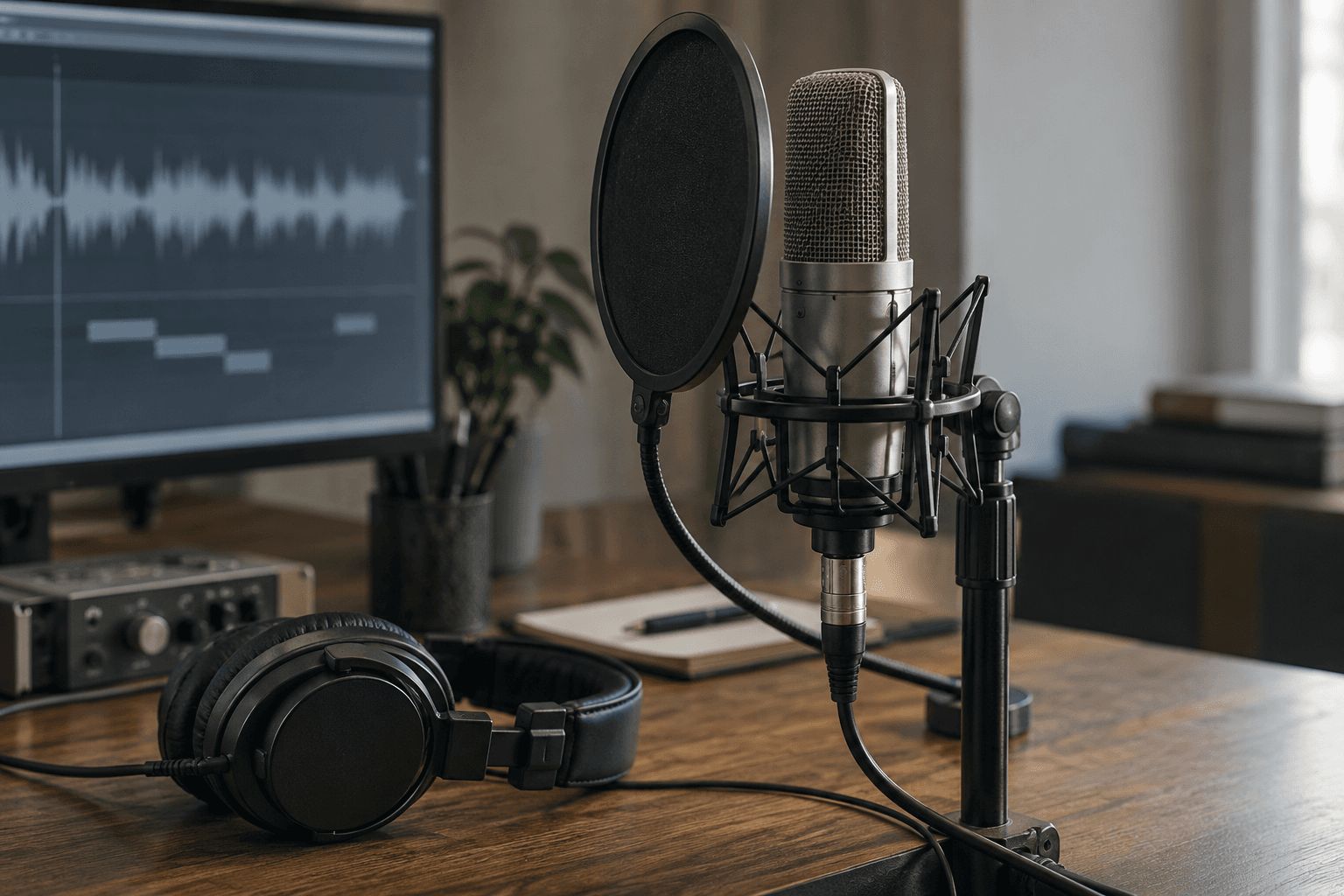
Good vocal tuning is the kind nobody notices. That is the aim when a natural result is the goal. Before editing, listen to the voice within the arrangement and identify what needs attention. A slide, vibrato or approach from below may be part of the performance rather than a mistake.
Correct with context
Automatic correction depends on the selected notes or scale and the correction settings. Controls for correction speed and expressive variation can affect how much of the original movement remains. Manual editing lets the engineer assess individual notes and decide how much to move them. Neither approach removes the need to listen: compare before and after, particularly through transitions and phrase endings, and check for artifacts or unintended changes in expression.
When to consider another take
If a phrase does not communicate what the song needs, consider recording another take. Pitch correction does not replace the interpretation, breath or rhythm of a performance. A new recording may resolve an issue that otherwise requires extensive editing.
Review timing too
The relationship between the voice and the pulse affects the feel of the arrangement. Adjust timing where needed while preserving the intended phrasing. Listen closely to consonants, transitions and phrase endings, and make the final assessment within the complete song rather than only in the isolated vocal.